[email protected] Quote



[email protected] Quote

A root vegetable washing and cleaning process decides product safety, appearance, labor cost, and downstream production stability. However, customers should not treat potatoes, carrots, ginger, and cassava with one simple washing method. Therefore, a practical root vegetable processing line usually combines soaking, bubbling washing, brush roller washing, spray rinsing, pagbabalat, pag-uuri, pagputol, and secondary cleaning.
Root vegetable preparation changes with raw material condition, product shape, and investment budget. Therefore, customers need a suitable washing process design before they buy a root vegetable washing machine or request a quotation.
 Get Quote
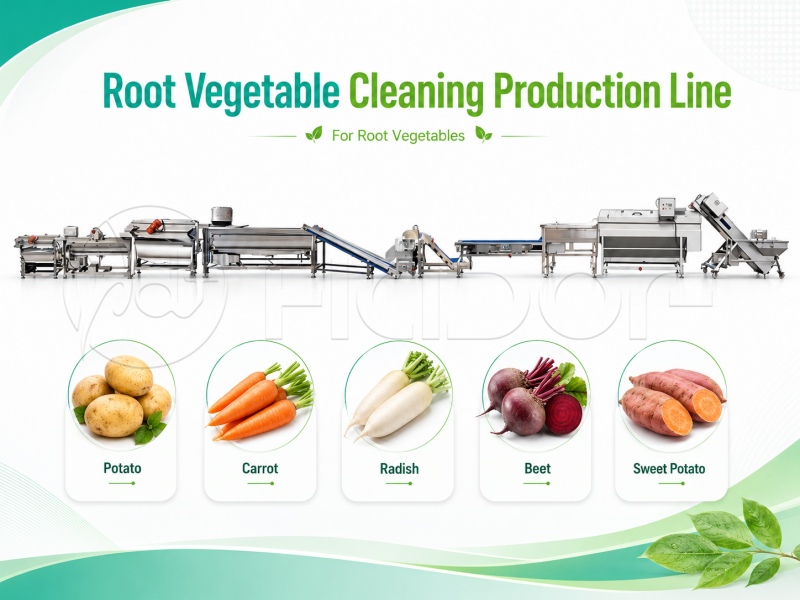
Heavy-soil root vegetables include potatoes, sweet potatoes, cassava, taro, and yam. These materials usually need soaking, bubbling washing, and brush scrubbing before peeling.
However, thin-skin vegetables include carrots, white radish, beetroot, and lotus root. These materials need gentler washing technology, because excessive friction may damage the surface.
Moreover, irregular materials include ginger, turmeric, onion, garlic, and konjac. These products need brush roller cleaning, adjustable water spray, and longer dirt removal time.
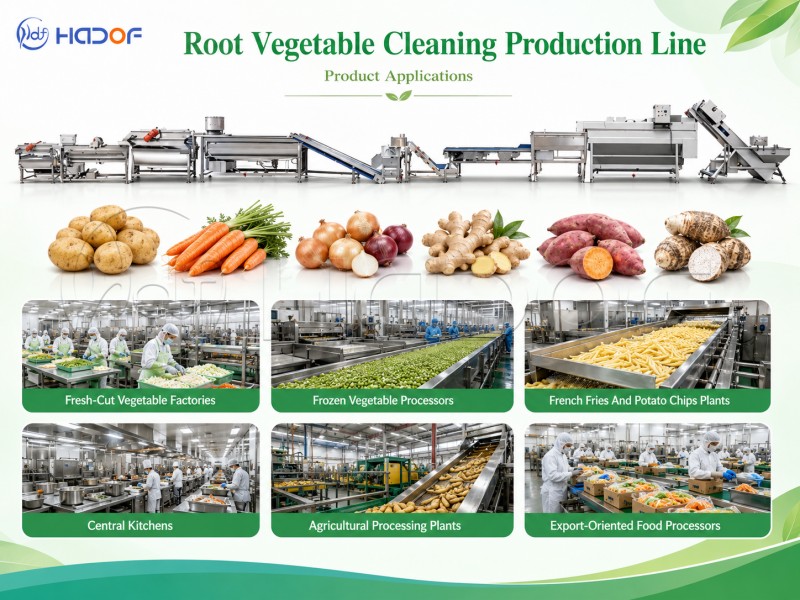
Fresh-cut vegetable factories need continuous root vegetable washing, pagbabalat, slicing, shredding, and dicing.
Frozen vegetable processors need carrot dice preparation, potato strip cleaning, and IQF vegetable pre-treatment.
French fries and potato chips plants focus on potato washing, abrasive peeling, pagputol, rinsing, blanching, frying, or freezing.
Central kitchens and meal suppliers require stable hygiene, lower labor input, and easy machine cleaning.
Agricultural processing plants handle ginger, cassava, sweet potato, radish, yam, and local root vegetable production.
Export-oriented food processors care more about clean appearance, continuous output, food-grade machinery, and standard operation.
 Get Quote
Root vegetable cleaning equipment supports many applications. For example, customers can process fresh potato to peeled potato, carrot to washed carrot slices or dices, ginger to washed ginger slices or ginger powder raw material, and sweet potato to peeled and cut raw material. Also, customers can use the same root vegetable cleaning system for IQF freezing, ready-to-cook vegetable packs, frying, pagpapatuyo, grinding, powder manufacturing, and central kitchen production.
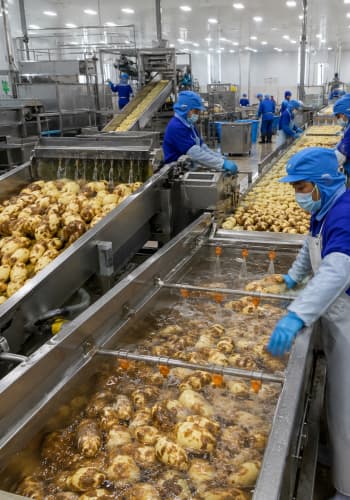 Potato Washing & Nagbabalat
 Frozen Root Vegetable Plants
 Central Kitchen
 French Fries Processing Plant
Our company designs the line according to workshop length, drainage, hourly capacity, labor plan, product shape, and automation level.


A small setup usually includes a washing and peeling machine and a vegetable cutting machine. It suits about 500KG/H capacity and a reference investment budget of USD 5,000–20,000. However, the final machine price depends on size, material, voltage, and cutting needs. This configuration suits customers who need affordable equipment, simple operation, and less manual washing.


This root veg cleaning line can follow feeding & soaking, large brush washing & pagbabalat, manual sorting, vegetable cutting, blanching , dewatering, vortex washing & drain. It suits about 1000–2000KG/H capacity and a reference budget of USD 25,000–90,000. Moreover, this root vegetable washing production line suits customers who need continuous operation and stable cleaning results.


The industrial root vegetable production process follows automatic feeding, soaking & pre-washing, steam peeling, high-pressure washing, pagputol, blanching/freezing/frying. It suits French fries plants, potato chips factories, IQF vegetable processors, and export food factories. The investment budget usually exceeds USD 100,000 and can process tons of root vegetables.
If you are planning to build a potato, carrot, ginger, sweet potato or mixed root vegetable washing and peeling line, Hadof can help you design a suitable process according to your raw material, soil level, peeling requirement, capacity, factory layout and final product type. Send us your material photos, target capacity and workshop size to get a customized root vegetable washing and cleaning solution.
The root vegetable washing process should reduce mud step by step. Therefore, customers usually need soaking, bubbling washing, brush roller washing, high-pressure spray washing, or vortex washing for cut root vegetables.
☘Soaking softens surface soil, mud blocks, and dirt inside root gaps. Meanwhile, bubbling washing moves materials gently through water and reduces product bruising. This cleaning method has gentle pre-washing, better soil softening, continuous feeding, water-saving design, and optional sanitizing.
☘A water bucket elevator handles feeding, soaking, pre-washing, and continuous lifting. This machine suits heavy-soil root vegetable handling before the main washing machine.
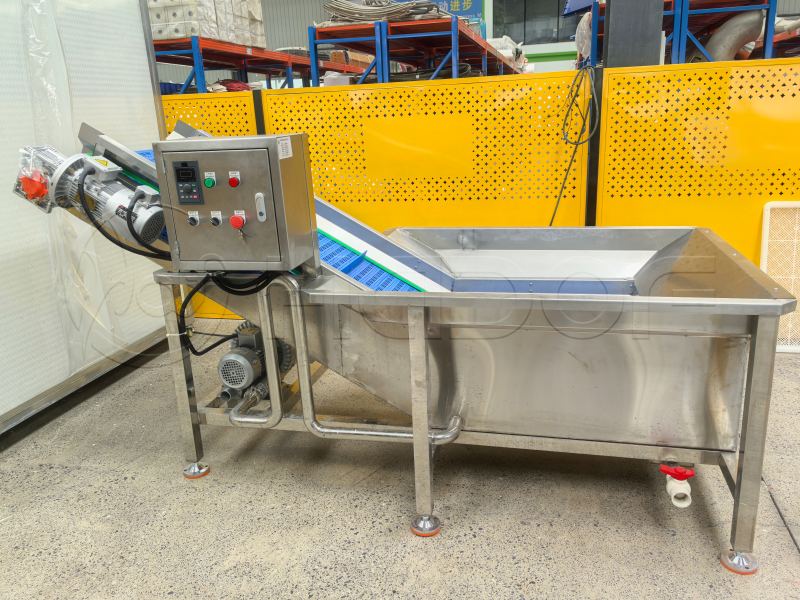
☘Also, a bubble washing machine creates water tumbling through an air bubble generator. Floating impurities leave through the overflow tank, and sediment leaves through the drain outlet. The reference capacity covers 500KG/H, 600KG/H, and 1,500–2,000KG/H. The power range reaches about 2.25–5.2KW.
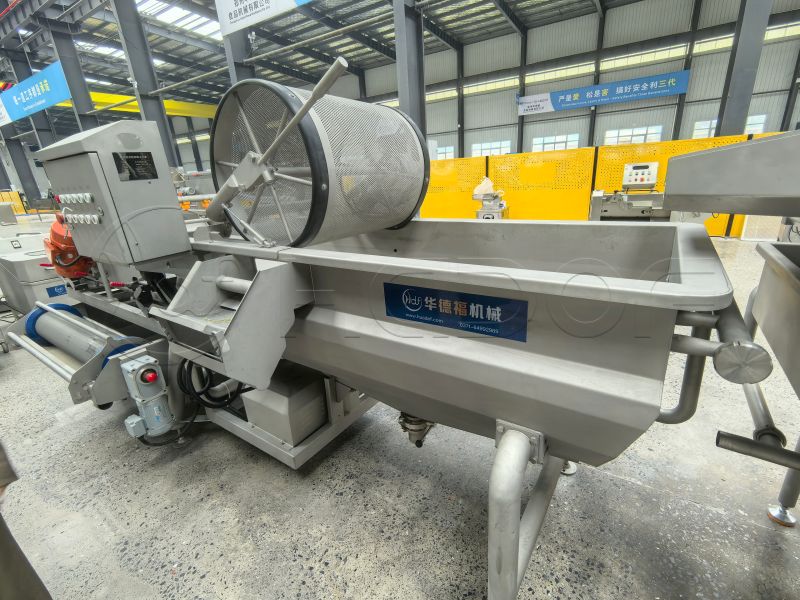
◉Brush roller washing handles potato eyes, carrot surface, ginger curves, and sweet potato mud marks. Therefore, water rinsing alone cannot clean these uneven surfaces well. Key benefits include 360°surface scrubbing, brush hardness options and polishing effect.
◉The brush washer uses multiple rotating brushes and clean water spray. The machine removes mud, polishes the surface, and prepares material for peeling. You can choose soft brushes or hard brushes according to material skin, and capacity reaches 700–2,000KG/H, and the power range of 0.75–3KW.
◉Also, brush length options include 800MM, 1,000MM, 1,500MM, and 2,000MM. This design helps customers match capacity, factory space, and cleaning depth.
➤Clean water spray washing removes residues after bubble washing and brush washing. Moreover, the final rinse directly affects export vegetable cleanliness and product appearance.
➤A high pressure cleaning machine controls water flow and spray angle through adjustable nozzles. The machine suits ginger, carrot, radish, potato, and other uneven products. Customers can place clean water spray before or after peeling. Before peeling, the spray removes mud. After peeling, the spray removes peel pieces and starch.
➤The W800MM-4M model handles about 1,000KG/H kasama 7KW power. The W800MM-6M model handles about 2,000KG/H kasama 9.2KW power.
Vortex washing cleans root vegetables after slicing, shredding, or dicing. Therefore, customers often use it after cutting machines in carrot dice, potato slices, and ginger slice production. The vortex washing machine uses water flow and bubble cleaning to remove starch, small particles, and cutting residues. Also, the draining section helps reduce surface water before blanching, freezing, pagpapatuyo, or frying.


If you have any questions of root vegetable washing technique, please contact us!
The peeling process depends on skin thickness, capacity, product loss, and budget. Therefore, customers should compare steam peeling, abrasive peeling, and brush peeling before they purchase root vegetable peeling equipment.
A steam peeler uses high-temperature steam to separate skin from root vegetable flesh. It suits large potato, carrot, beetroot, French fries, potato chips, and frozen vegetable projects. Moreover, it helps customers pursue lower peeling loss, uniform appearance, and continuous production. Processing capacity follows line capacity. Steam pressure depends on material and peeling depth. Peeling time changes with potato size, skin thickness, and final product requirements. Medium and large industrial root vegetable processing plants may consider this technology first.
Magbasa pa
A washing and peeling machine integrates cleaning and abrasive peeling. Some configurations also connect slicing and shredding procedures. The machine uses abrasive rollers, abrasive plates, or friction surfaces to remove skin. Meanwhile, spray water removes mud, peel pieces, and starch. This equipment suits potatoes, sweet potatoes, carrots, and common root vegetable preparation. It offers a more affordable investment than steam peeling. Also, replaceable abrasive plates and separated housing design support easier maintenance. Small food factories, central kitchens, and potato pre-treatment lines often choose this cost-effective solution.
Magbasa pa
Brush peeling provides gentler light peeling, surface polishing, and appearance protection. Therefore, it suits customers who do not want deep peeling. The process works well for ginger, carrots, yam, sweet potatoes, and irregular materials. Customers can adjust brush hardness, spray water, and conveyor speed. Moreover, brush peeling balances soil removal, polishing, and light skin treatment. Central kitchens, fresh-cut vegetable plants, ginger processors, and powder production plants can use this technique.
Magbasa pa
Industrial root vegetable cleaning does not mean stronger washing only. Instead, the line softens soil first, then tumbles material, then brushes recessed areas, and finally rinses residues with clean water. A regular root vegetable cleaning line can reach about 1,500KG/H, kasama 13KW power and 14340*2100*1900mm dimensions.
Root vegetable processors often face challenges such as heavy soil contamination, inconsistent cleaning quality, labor-intensive operations, and product loss during peeling. Therefore, a modern washing and peeling system must provide stable cleaning performance, flexible processing options, and easy integration with downstream equipment. The following six features help improve production efficiency, product quality, and operational reliability.

The process combines soaking, bubbling washing, brush scrubbing, and high-pressure rinsing into one continuous workflow. Each stage removes different types of contaminants, from loose soil to stubborn dirt hidden in surface grooves. Therefore, the system achieves more thorough cleaning results than a single washing method.

Different vegetables require different cleaning intensities and peeling methods. Operators can adjust soaking time, bubble intensity, brush hardness, spray pressure, and peeling depth according to product characteristics. This flexibility allows the same line to process potatoes, carrots, ginger, sweet potatoes, yam, cassava, taro, and other root vegetables efficiently.

Food-contact components use SUS304 stainless steel construction. This material provides excellent corrosion resistance and long-term durability in wet processing environments. Moreover, the smooth surface supports daily sanitation procedures and helps processors comply with food safety requirements.

Production requirements vary between central kitchens, vegetable processors, and industrial food factories. Therefore, the equipment supports multiple capacity options. Bubble washing machines typically handle 500–2000KG/H, brush roller washing machines process 700–2000KG/H, and high-pressure washing machines cover 1000–2000KG/H. Customers can select suitable configurations according to production goals and future expansion plans.

The washing and peeling section serves as the foundation of many food processing lines. After cleaning, products can move directly into cutting, pag-uuri, blanching, freezing, frying, pagpapatuyo, grinding, or packaging operations. This modular design simplifies line expansion and supports the development of complete root vegetable processing solutions.

Every processing facility has unique space limitations and production requirements. Therefore, the line layout can be customized according to workshop dimensions, drainage systems, product types, labor allocation, hourly output targets, and automation preferences. A customizable root vegetable plant design helps improve workflow efficiency while maximizing available floor space.
A well-designed root vegetable washing and peeling line not only improves cleaning quality but also reduces labor requirements, minimizes raw material loss, and increases production consistency. As a result, processors can achieve higher operational efficiency while meeting modern food safety and quality standards.
The best process depends on soil level, skin thickness, and peeling requirements. Usually, customers choose soaking, bubbling washing, brush scrubbing, and pressure spray washing.
Potatoes need soaking when they carry heavy mud or storage soil. Moreover, soaking reduces brush load and improves abrasive peeling stability.
Brush washing removes mud and polishes the surface. However, abrasive peeling removes skin through abrasive rollers or plates.
Customers should consider steam peeling for large continuous potato or carrot lines. Also, steam peeling suits low loss and uniform appearance targets.
A root vegetable washing line can handle 500KG/H to 2000KG/H or higher. The exact capacity depends on washer size and process design. Our company can connect the line with slicers, shredders, dicers, blanchers, air dryers, quick freezers, fryers, dryers, and packing machines.
Iwanan ang Iyong Mensahe
 Libreng Quote
Libreng Quote
Libreng Quote
 Wikang Filipino
 English
 Afrikaans
 Shqip
Shqip العربية
 Հայերեն
 Azərbaycan dili
 Беларуская
 Bosanski jezik
 Български
 မြန်မာစာ
 Hrvatski
 Čeština
 Dansk
Dansk Nederlands
 Eesti keel Wikang Filipino
 Suomi
Suomi Français
 Galego
 Deutsch
 Ελληνικά
 हिन्दी; हिंदी
 Magyar
 Íslenska
 Bahasa Indonesia
 Gaeilge
 Italiano
 日本語
日本語 Қазақ тілі
 한국어
한국어 ພາສາລາວ
 Latīna
 Latviešu valoda
 Bahasa Melayu
 Монгол
 नेपाली
 Norsk
Norsk Português
 Português do Brasil
 Română
 Русский
 Cрпски језик
 Slovenčina
 Slovenščina
 Español
 Svenska
 ภาษาไทย
 Türkçe
 Українська
 Oʻzbek tili
 Tiếng Việt
Hindi mo maaaring kopyahin ang nilalaman ng pahinang ito