[email protected] Citazione



[email protected] Citazione

A vegetable cleaning production line helps food factories, central kitchens, supermarkets, and fresh-cut vegetable suppliers handle leafy vegetables, root vegetables, and cut vegetable materials with higher efficiency. Moreover, you can match vortex cleaning, bubble cleaning, peeling, taglio, blanching, cooling, draining, and packing equipment according to your food production process.
Many customers need more than one vegetable washing machine, because their food processing procedure includes sorting, taglio, cleaning, draining, and packaging.

Central kitchens usually handle cabbage, spinach, potatoes, carrots, onions, and prepared salad vegetables every day. However, manual cleaning often causes unstable output and uneven cleanliness. A vegetable cleaning production line can support vegetable preparation, clean vegetable making, food material treatment, and ready-to-cook vegetable processing. You can also connect the line with cutting machines, blanching machines, air dryers, and packaging machines.

Supermarkets and clean vegetable delivery companies need stable appearance, less leaf damage, and fast packing. Therefore, a bubble vegetable cleaning line or vortex vegetable cleaning production line can improve product quality before retail packaging. The line can handle fresh vegetables, diced vegetables, sliced vegetables, shredded vegetables, and root vegetable products. You can purchase different equipment according to your store supply plan, order volume, and daily processing capacity.

Food factories usually care about capacity, hygiene, quotation, plant layout, and investment return. Moreover, agricultural cooperatives need affordable vegetable processing machinery to increase product value. Our company can support vegetable washing equipment selection, food production line design, workshop layout, and customized quotation based on your material type.
Therefore, a complete vegetable cleaning system gives you better production continuity, cleaner products, and lower labor pressure.
Different vegetables need different cleaning technology, because leafy vegetables, cut vegetables, and root vegetables have different surface structures. Therefore, you should choose the vegetable cleaning production line according to raw materials, output, and final product format.
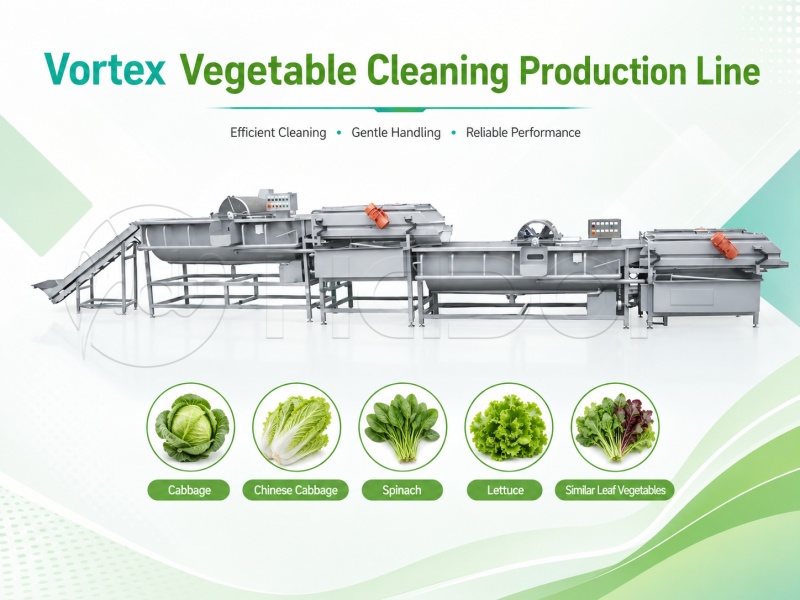

The vortex vegetable cleaning production line suits large-scale continuous leafy vegetable cleaning. It can handle cabbage, Chinese cabbage, spinach, lettuce, and similar leaf vegetables. Moreover, the line uses tumbling spiral water flow as the main cleaning method, and it uses bubble cleaning as support. This process cleans both sides of vegetable leaves, while it reduces leaf damage.
The standard process can include soaking and lifting, dehydration conveying, manual picking, taglio, feeding, first vortex cleaning, second cleaning, dehydration. This food processing process suits fresh-cut vegetable production, supermarket vegetable supply, central kitchen preparation, and group meal vegetable management.
The bubble vegetable cleaning production line suits fresh vegetable cleaning, diced vegetable washing, sliced vegetable washing, and shredded vegetable processing. However, it also works well for many leafy vegetable materials. The line uses bubble and water flow technology to remove mud, sand, and surface impurities.
The double-cylinder bubble cleaning design extends the cleaning path. Moreover, the square tank design helps collect and discharge sediment. The removable mobile filter water tank saves water, and the chain plate discharge method reduces material sticking. You can also choose cross-flow spray washing or bubble modules according to your food manufacturing process.
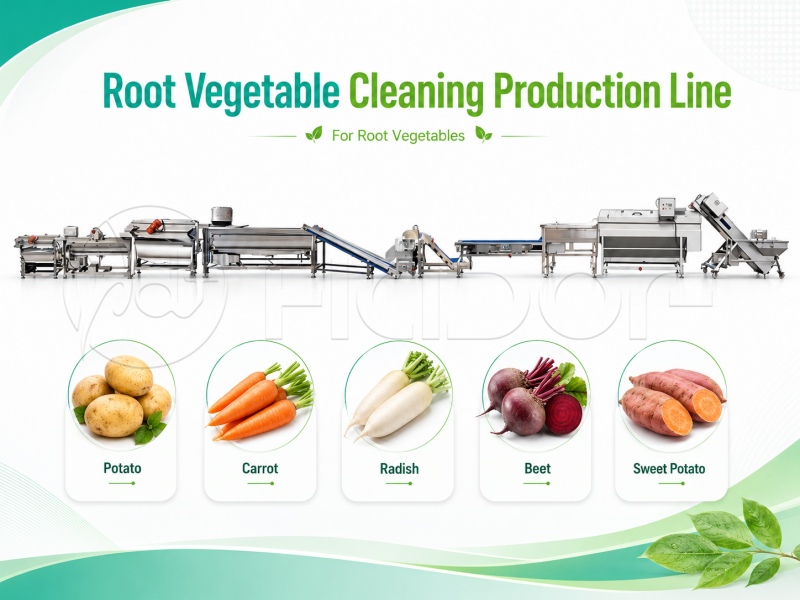
The root vegetable cleaning production line suits potatoes, carrots, sweet potatoes, lotus roots, radishes, onions, and similar materials. Therefore, it often includes soaking, washing, polishing, peeling, taglio, blanching, cooling, dehydration, e imballaggio.
This line can support root vegetable disposal, vegetable material treatment, and clean vegetable preparation. Moreover, brush rollers and sand rollers help clean and peel root vegetables. The system can also connect with slicers, shredders, dicers, blanching machines, vortex washing machines, and automatic packaging machines.
A complete vegetable cleaning production line should follow the raw material condition and final product requirement. Therefore, we usually design the food processing system around your material size, mud content, cutting style, water drainage, and packing method.
☘Soaking And Lifting: The soaking tank loosens mud and floating impurities.
☘Draining Conveying: The conveyor removes excess water before sorting.
☘Manual Picking: Workers remove yellow leaves and foreign materials.
☘Taglio: The vegetable cutter cuts leaves into required sizes.
☘Alimentazione: The elevator transfers materials into the washing machine.
☘First Vortex Cleaning: Spiral water flow cleans leaf surfaces.
☘Second Cleaning: Bubble washing improves final cleanliness.
☘Dehydration: The drainer removes surface water before packing.

◉Pre-Treatment: Workers remove large soil blocks and damaged raw materials.
◉Primary Washing: The bubble washer or spray washer removes surface mud.
◉Peeling: The peeling machine removes skin according to product needs.
◉Taglio: The slicer, shredder, or dicer prepares target shapes.
◉Blanching: The blanching machine helps sterilize and protect color.
◉Cooling: Cold water cooling locks product freshness.
◉Dehydration: The centrifugal dehydrator or air dryer removes surface water.
◉Packaging: The packing machine supports vacuum packing or modified atmosphere packing.

Vegetable cleaning machinery involves cost, hygiene, production output, and long-term maintenance. Therefore, you should evaluate the complete production line instead of only comparing machine price.
The line should match leafy vegetables, root vegetables, diced materials, sliced materials, and shredded materials. Otherwise, you may face leaf breakage, poor cleaning, or unstable discharge.
Bubble cleaning, vortex cleaning, spray washing, and roller polishing solve different food treatment problems. Therefore, you should match the cleaning technique with your material surface.
A higher automation level reduces labor costs and improves consistency. Moreover, automatic conveying, water circulation, draining, and packing can shorten the whole food production process.
Food-grade stainless steel helps customers manage sanitation, cleaning, and corrosion resistance. Meanwhile, easy-clean structures reduce maintenance time and support long-term plant operation.
A water circulation system can reduce water waste. Therefore, a cost-effective vegetable cleaning production line should consider water saving, power consumption, and wastewater discharge.
Your vegetable cleaning line price depends on capacity, machine length, configuration, voltage, and optional equipment. You’d better share materials, output, workshop drawing, and packing method before purchase.
A vegetable cleaning production line needs several machines, because one machine cannot finish the complete food preparation procedure. Moreover, each machine controls one key step in the food handling process.
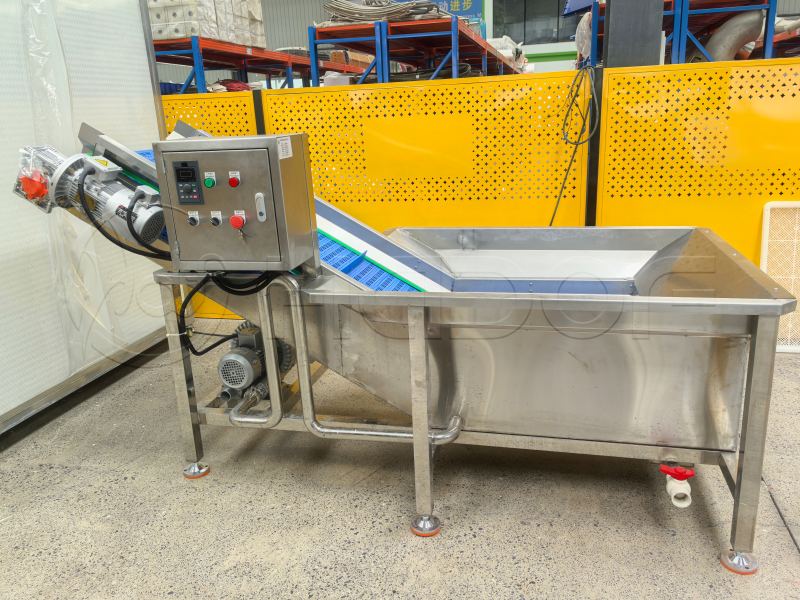
The bubble cleaning machine suits vegetables, fruits, aquatic products, leafy materials, granular products, and pickled product desalting. It uses bubble tumbling to remove impurities from product surfaces. Moreover, the overflow tank removes floating matter, and the drain outlet removes sediment. The machine can also add ozone sterilization according to customer requirements.
Get Quote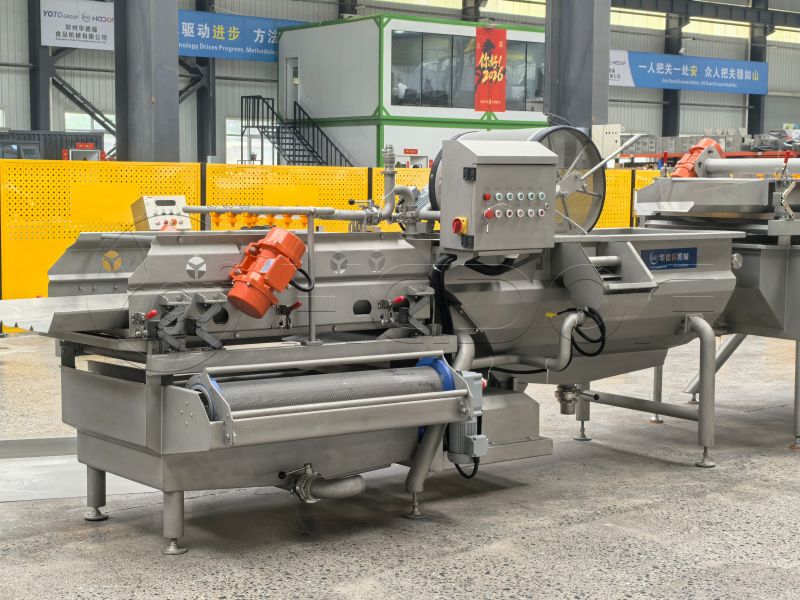
The vortex cleaning machine mainly cleans cut vegetables and drains them through vibration. The machine combines vortex water flow and bubble cleaning. Therefore, it can remove impurities while it protects leafy vegetable structure. The semi-circular cleaning tank also reduces cleaning dead corners.
Get Quote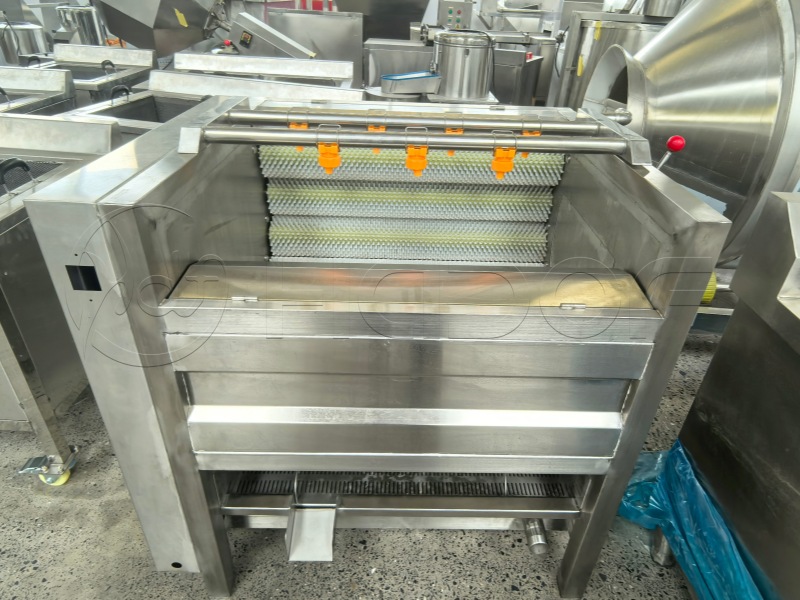
The roller cleaning and peeling machine suits carrots, potatoes, sweet potatoes, ginger, and seafood shell cleaning. The machine uses brush polishing, peeling, and water spraying. Moreover, soft brushes and hard brushes can match different materials. You can choose this equipment for root vegetable cleaning, peeling, polishing, and pre-processing.
Get Quote
The vegetable cutter supports slicing, shredding, dicing, strip cutting, and segment cutting. Therefore, it fits salad processing, central kitchen production, frozen vegetable processing, and root vegetable manufacturing. Some cutters can process 1-2 tons per hour, and they can change knife groups for different shapes.
Get Quote
The blanching machine helps sterilize products and protect color after cutting. Meanwhile, the vibrating drainer removes water from washed vegetables. The parallel air dryer or tumble air dryer reduces surface moisture before packaging. These machines improve clean vegetable quality, packing effect, and shelf-life management.
Get QuoteCustomers often compare output, equipment length, power, and investment budget before they buy vegetable cleaning equipment. Therefore, the following configurations can help you understand common line selection.
| Line Type | Suitable Materials | Total Length | Machine Weight | Output | Power |
| Vortex Vegetable Cleaning Production Line | Cabbage, Spinach, Leafy Vegetables | 13700*1400*1650mm | 800kg | 1500kg/h | 18.5kw |
| Bubble Vegetable Cleaning Production Line | Fresh Vegetables, Diced, Sliced, Shredded Materials | 12400*1270*1640mm | 600kg | 1000kg/h | 11kw |
| Root Vegetable Cleaning Production Line | Potato, Carrot, Sweet Potato, Lotus Root | 14340*2100*1900mm | 700kg | 1500kg/h | 13kw |
However, every quotation depends on material, capacity, voltage, automation level, workshop size, and optional equipment. You may request a customized vegetable processing line price after you confirm raw materials and target output.
The vegetable cleaning production line cost depends on output, equipment configuration, automation level, and workshop layout. Therefore, our company provides a project quotation after you confirm material type, capacity, voltage, and final product format.
One line can handle multiple vegetables only with proper equipment matching. However, leafy vegetables usually need vortex or bubble washing, while root vegetables often need roller cleaning, peeling, taglio, blanching, and cooling.
Your quotation becomes more accurate when you provide vegetable type, hourly output, cutting size, workshop area, voltage, packing method, and budget range. Therefore, our engineers can match a cost-effective vegetable washing line for sale more quickly.
Lascia il tuo messaggio
 Preventivo gratuito
Preventivo gratuito
Preventivo gratuito
 Italiano
 English
 Afrikaans
 Shqip
Shqip العربية
 Հայերեն
 Azərbaycan dili
 Беларуская
 Bosanski jezik
 Български
 မြန်မာစာ
 Hrvatski
 Čeština
 Dansk
Dansk Nederlands
 Eesti keel
 Wikang Filipino
 Suomi
Suomi Français
 Galego
 Deutsch
 Ελληνικά
 हिन्दी; हिंदी
 Magyar
 Íslenska
 Bahasa Indonesia
 Gaeilge Italiano
 日本語
日本語 Қазақ тілі
 한국어
한국어 ພາສາລາວ
 Latīna
 Latviešu valoda
 Bahasa Melayu
 Монгол
 नेपाली
 Norsk
Norsk Português
 Português do Brasil
 Română
 Русский
 Cрпски језик
 Slovenčina
 Slovenščina
 Español
 Svenska
 ภาษาไทย
 Türkçe
 Українська
 Oʻzbek tili
 Tiếng Việt
Non puoi copiare il contenuto di questa pagina