On April 13, 2025, Hadof received an inquiry from an Australian agricultural processing customer. The customer name was Michael Turner. Mr. Turner operated a taro planting and agricultural processing business in Queensland, 호주. 게다가, his company mainly handled fresh taro cultivation and primary agricultural product preparation. 하지만, he planned a deeper taro powder manufacturing business for higher product value. Mr. Turner hoped to supply taro powder products to local supermarkets, food companies, and baking enterprises. 그러므로, he searched for a cost-effective 500kg/h taro powder production line.
Mr. Turner owned a 2,700㎡ factory building in Queensland. 뿐만 아니라, he preferred a taro powder making line with low labor consumption and energy-saving technology. His budget remained below USD 50,000. 추가적으로, he required Australian food safety compliance and simple machine management.
How to Design The 500kg/h Taro Powder Production Plan?
 At the beginning
,
Mr.
Turner planned freeze-dried taro powder production because freeze-drying preserved color and flavor better. 하지만,
freeze dryer investment (
about 100,000 USD)
exceeded his total purchasing budget. 그러므로,
Hadof suggested a semi-automatic drying and grinding procedure of taro first to reduce investment pressure.
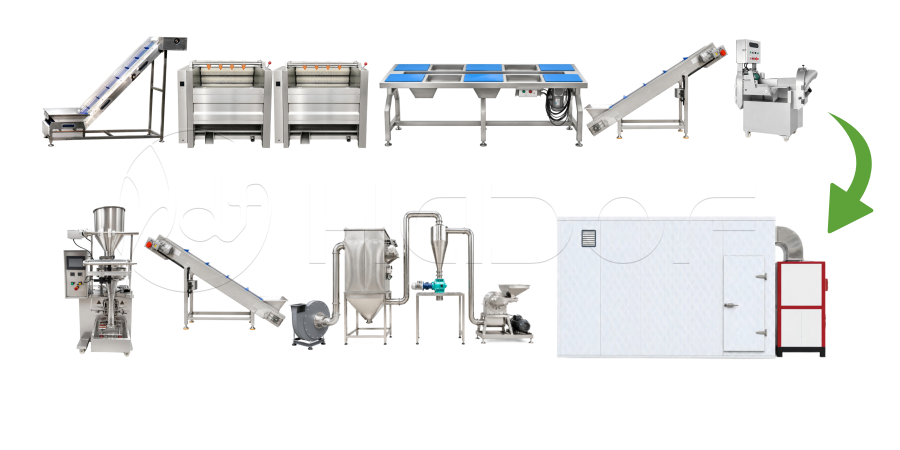
The 500kg/h taro powder manufacturing system included cleaning,
crushing,
hot air drying,
screening,
and semi-automatic powder packaging.
Mr.
Turner worried about uneven drying and mildew risks during taro powder preparation. 뿐만 아니라,
he concerned about unstable powder fineness and irregular packaging quality. 그러므로,
we explained practical moisture management and microbial control standards carefully,
and confirmed that compliant hot air dried taro powder already possessed commercial business value.
The semi-automatic taro powder production procedure occupied around 200–250㎡ space. 그 동안에,
the remaining factory area supported raw material storage and finished powder warehousing.
The extra space of 2,500㎡ are suitable for future taro processing expansion projects.
Fresh taro contained high moisture content during taro powder processing preparation. 그러므로, 500
kg/h fresh taro input only produced around 100–150kg/h finished taro powder.
The final powder yield usually remained 20-30%. 마지막으로,
Mr.
Turner accepted this taro powder production proposal and confirmed further equipment discussion.
What Equipment Did Hadof Recommend For The 500kg/h Taro Powder Manufacturing System?
We designed the complete 500 kg/h taro powder production procedure according to Australian processing conditions and commercial retail requirements. 게다가, every taro powder processing machine supported stable operation, easy management, and future expansion possibilities.
-
Two-Stage Peeling Washing And Cutting System
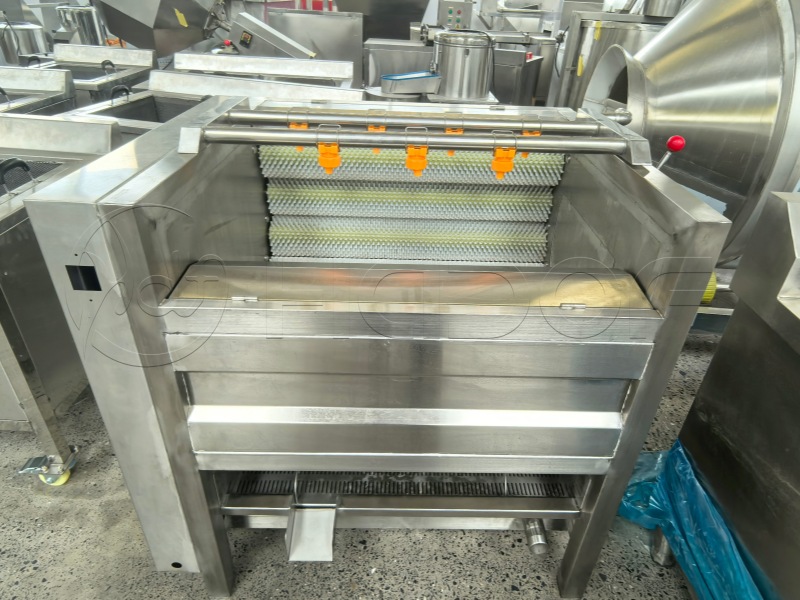
Fresh taro usually carries heavy mud, thick skin, and sticky fiber material. 그러므로, single-stage cleaning equipment often creates unstable peeling performance. So we recommended two U-shaped brush peeling washers for better cleanliness and lower contamination risks. 그 다음에, this two-stage taro cleaning process improved downstream drying stability significantly.
Also, we suggested a taro strip cutting machine instead of slicing machinery. Because taro strips maintained stronger structure during handling and drying management. 뿐만 아니라, strip cutting technology reduced blade wear and improved semi-automatic production efficiency.
자세히 알아보기
-
Hot Air Circulation Drying Technology
Mr. Turner finally selected hot air circulation drying technology for this 500kg/h taro powder production business. This drying proposal focused on controllable cost, simple maintenance, and future expansion convenience. The drying room adopted multi-stage temperature control and uniform heat circulation technology. 그러므로, the taro drying procedure achieved stable dehydration management and consistent drying quality. 추가적으로, it contained an adjustable frame structure and long service life. 그 동안에, the heat source includes electricity, steam, and gas heating. 그러므로, the Australian customer could choose affordable local energy management solutions later.
자세히 알아보기
-
Powder Grinding Preparation System
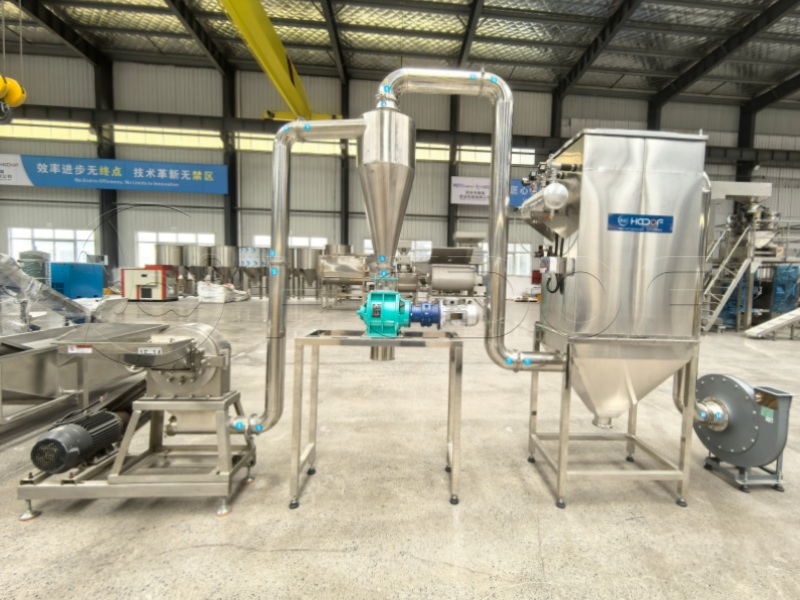
The taro powder grinding process required stable particle size management for supermarket retail applications. 그러므로, our Hadof’s engineer designed a two-stage crushing and screening procedure. The initial crusher handled pre-crushing treatment for dried taro strips. 그 다음에, the fine grinding machine completed final taro flour manufacturing. 게다가, the grinding system controlled powder fineness between 80–120 mesh. 뿐만 아니라, the double dust collection systems including cyclone and pulse dust removal machines improve workshop cleanliness and reduced powder pollution during production management.
자세히 알아보기
-
Semi-Automatic Powder Packaging Procedure
Hadof recommended a semi-automatic powder packaging machine for initial investment control. This packaging proposal balanced operational efficiency and purchasing budget effectively. 게다가, the packaging system supported future upgrading possibilities. The current packaging machine handled weighing, filling, and sealing management for powder bags. Later, the customer could add automatic feeding, automatic weighing, coding, and sealing systems gradually.
자세히 알아보기
What Is The Price of 500KG/H Taro Powder Production Line in Australia?
After several technical discussions, Mr. Turner visited the Hadof factory on May 18, 2025. Hadof arranged factory reception, workshop tours, and machine testing demonstrations. 게다가, Hadof provided technical documents and taro powder production references during the visit. Hadof offered caround 10% comprehensive discount of the complete 500kg/h taro powder processing line. The original quotation reached USD 50,360. 하지만, the final transaction price reached USD 45,324 after discount adjustment. Mr. Turner signed the contract and paid the deposit on May 25, 2025. Afterwards, Hadof completed equipment manufacturing within 15 working days. The customer paid the remaining 60% balance before shipment on June 15, 2025.
Technical Parameters Of 500KG/H Taro Powder Production Line
| Equipment Name |
Key Parameters |
Quantity |
가격 (USD) |
| Bucket Elevator And Conveyor |
500–800kg/h; Height 3–4m; Length 5–6m |
5 |
11,000 |
| U-Type Brush Peeling Washing Machine-1 |
700kg/h; Brush Roller + Spray; 0.75kW |
1 |
1,380 |
| U-Type Brush Peeling Washing Machine-2 |
700kg/h; Enhanced Peeling And Fine Washing; 0.75kW |
1 |
1,380 |
| Manual Sorting Platform |
Length 4–5m; PU Belt; Manual Operation |
1 |
1,700 |
| Root Vegetable Strip Cutting Machine |
500kg/h; Adjustable Strip Size 6–10mm |
1 |
3,300 |
| Hot Air Drying Room |
500–600kg/h; 15–80℃; 3.5kW |
1 Set |
12,800 |
| Drying Cart |
304 Stainless Steel; Multi-Layer Tray Structure |
6 |
2,520 |
| Drying Tray |
304 Stainless Steel |
120 |
1,800 |
| Powder Crusher |
200–500kg/h; |
1 |
2,200 |
| Fine Grinding Machine |
200–400kg/h; 80–120 Mesh Powder |
1 |
4,600 |
| Vibrating Screen |
500kg/h |
1 |
1,600 |
| Semi-Automatic Powder Packaging Machine |
0.5–5kg/Bag; Screw Metering; Sealing |
1 |
3,900 |
| Dust Collector |
1.5–2.2kW |
1 |
1,180 |
| Spare Parts Package |
One-Year Consumable Parts |
1 |
1,000 |
| Total Price |
$50,360 USD 45,324 |
If you have any questions, please contact us for free quote!
How About Transportation And Installation Service of 500KG/H Taro Powder Production Line?
-
Transportation Service
Hadof arranged complete sea transportation service for the 500kg/h taro powder production machinery. The equipment departed from Ningbo Port, China, on June 22, 2025. Afterwards, the cargo arrived at Brisbane Port, 호주, around August 1, 2025. The sea transportation period lasted around 40 days. The complete taro powder processing system occupied one 40HQ container. 게다가, we used wrapping film and wooden case packaging for transportation protection. Also, we provided packing lists, invoices, bills of lading, origin certificates, and CE certification documents when necessary. The drying room and air duct structures supported detachable transportation design. 그러므로, local workers completed bolt assembly installation conveniently. The estimated sea freight and local logistics cost reached around USD 3,900.
-
Installation Service
The final installation location stood in Toowoomba, 퀸즈랜드, 호주. Hadof provided equipment layout drawings, wiring diagrams, process parameter suggestions, and video conference guidance. 그 동안에, the customer hired local electricians and installation workers for basic installation work. In addition, we noted that the peeling and washing section reserved drainage channels and sedimentation pits. The drying section also need to maintain ventilation channels, moisture prevention treatment, and floor load-bearing support. More importantly, the electrical system adopted Australian standard 415V/50Hz three-phase configuration. 뿐만 아니라, the control cabinet contained clear English operation markings for convenient equipment management.
Customer Testimonial of 500KG/H Taro Powder Production Line
The complete 500kg/h taro powder production line achieved delivery within our budget successfully.
The installation procedure progressed very smoothly. 게다가,
the machine operation remains simple and stable.
The finished taro powder quality also satisfies Australian supermarket requirements. 그러므로,
we plan automatic feeding and automatic packaging expansion during the next project stage.

Michael Turner
CUSTOMER
Hadof continues providing food powder production plans, vegetable processing systems, fruit drying projects, and agricultural product manufacturing proposals worldwide. 게다가, we supplies cost-effective food machinery, affordable production equipment, and customized processing technology for different investment budgets. If you have any questions, please contact us for free quote.



 30-40 Days Shipping