[email protected] Citāts



[email protected] Citāts
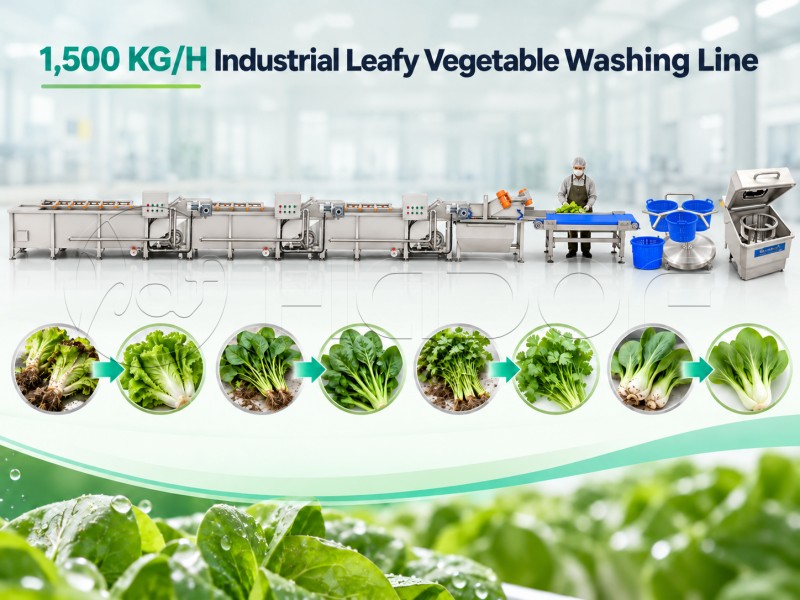
If your factory plans to process 8–10 tons of fresh leafy vegetables daily, Hadof can help you establish a continuous industrial washing process. We design a 1,500 kg/h leafy green cleaning system for food processors, centrālās virtuves, and vegetable distributors. Turklāt, it combines three-stage bubble washing, chemical dosing, water management and flexible dewatering. Turklāt, this vegetable cleaning line washes and dehydrate lettuce, spināti, kāposti, water spinach, and mustard greens for fresh-cut processing, šķirošana, iepakojums, and cold-chain distribution. Arī, we can adjust the number of dehydration units, the configuration of the cleaning equipment, and its level of automation based on the type of vegetables, available plant space, un investīciju budžets, thereby ensuring that the production line better meets actual processing requirements.
Our engineers will analyze raw materials, daily output, workshop conditions, and downstream equipment before selecting washing stages, equipment length, and dehydration process. Patiesībā, leafy green like salāti, spināti, Chinese cabbage, and mustard greens carries soil, dust, and field impurities on the surface. Most vegetable processing plants prefer to send the clean vegetables directly to the sorting, griešana, or packaging areas, while also avoiding excessive mechanical compression of the leaves during the washing process.
 Saņemt citātu
For 1.5 t/h clean leafy vegetable production needs, our team recommends the following washing procedure:
Material Sorting → Primary Bubble Washing → Chemical Dosing and Washing → Final Clean Water Rinsing → Vibrating Dewatering → Optional Centrifugal Dewatering → Sorting or Packaging.
Tikmēr, your existing equipment and investment budget determine whether the leafy vegetable cleaning line requires feeding, šķirošana, griešana, or packaging machines.
A 1.5 t/h three-stage washing system allows for the separation of distinct leafy vegetable processing tasks.
Pirmkārt, the primary vegetable washing machine removes soil, dust, and floating impurities through bubble agitation and water circulation.
Tālāk, the second washing stage involves washing through a chemical dosing system.
Beidzot, it uses clean water to remove remaining impurities and reduce treatment-liquid carryover.
This arrangement separates washing tasks and helps operators manage water quality across different processing stages.
 Saņemt citātu
For delicate leafy greens such as lettuce and spinach, we can adjust the bubble intensity, conveying speed, and spray pressure according to the vegetable’s leaf structure and the condition of the raw material, thereby avoiding unnecessary leaf damage caused by excessive agitation.
A complete leafy vegetable washing and dewatering line with the capacity of 1,500 kg/h consists of three main systems: a three-stage bubble washing system, a chemical dosing & water recirculation system, and downstream dewatering and material transfer equipment. This configuration ensures smooth connections between different processing stages. Turklāt, it allows customers to add vegetable cutting, šķirošana, and automatic packaging equipment in the future.
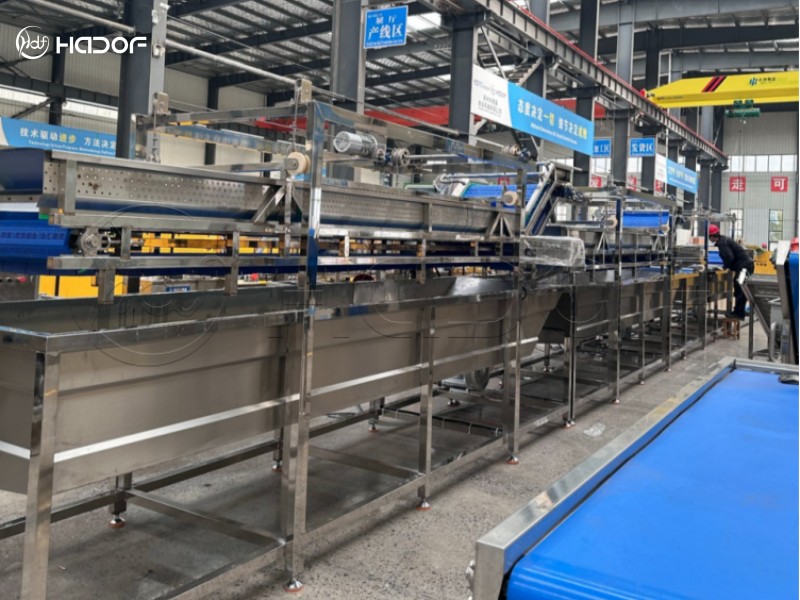
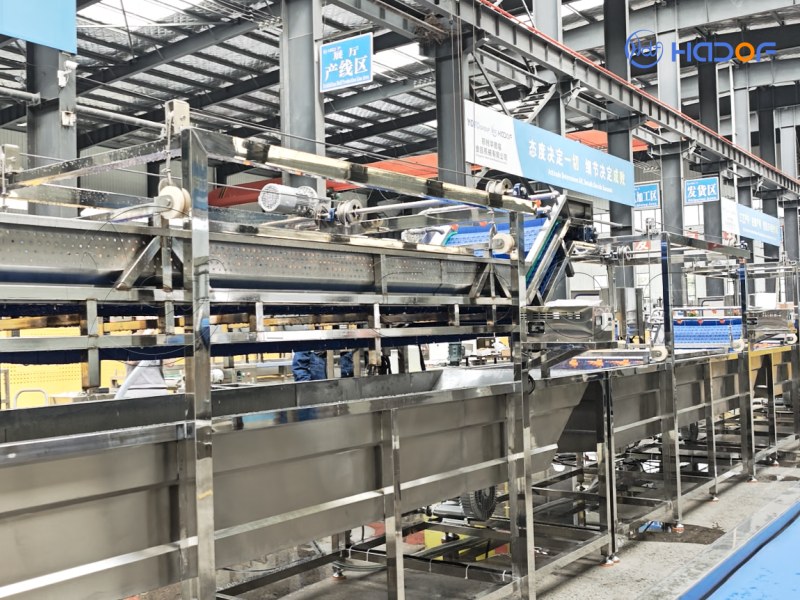
The three-stage bubble washing system forms the core of our 1.5 T/H vegetable processing solution. Pirmkārt, we recommend 3 bubble washers connected in series, each with the capacity of 2,000 kg/h, power of 6.15 kW and length of 4.8-5.0 metri. The machines combine bubble agitation with continuous conveying to handle different leafy vegetables. The first washer removes soil, smiltis, un peldošie piemaisījumi. Tālāk, the second washer works with the chemical dosing system for disinfection and cleaning. Beidzot, the third washer uses clean water to rinse away residues from previous washing stages. Turklāt, the machines use SUS304 structures, bubble agitation, overhead spraying, and variable-frequency conveying. We design the lifting structure allowing operators to clean and maintain inside the washing tank. Turklāt, we can customize the frames, plate thickness, feeding and discharge heights, equipment connections, and waterproof control cabinets. Piemēram, in our customized 1.5 T/H vegetable washing project in Vietnam, we added gantry frames, 2 mm thick stainless steel plates, double-layer waterproof control cabinets to meet the customer’s factory requirements.
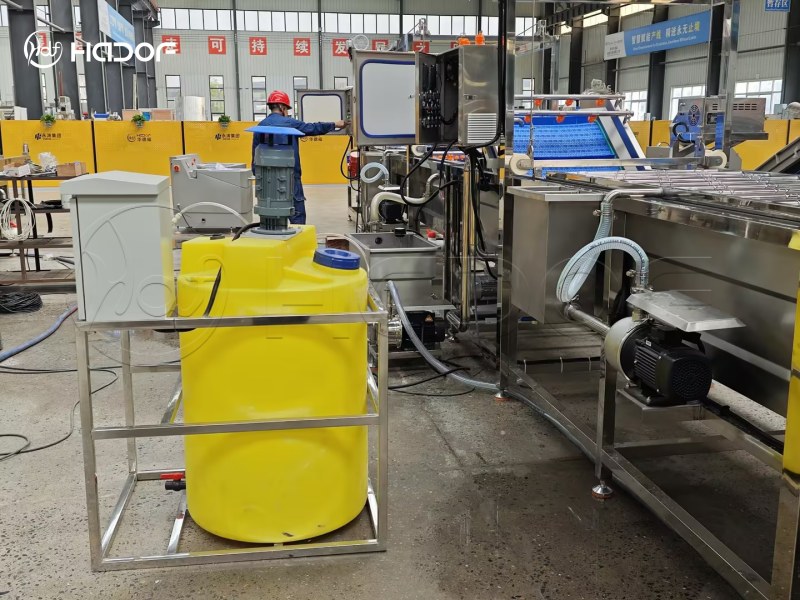
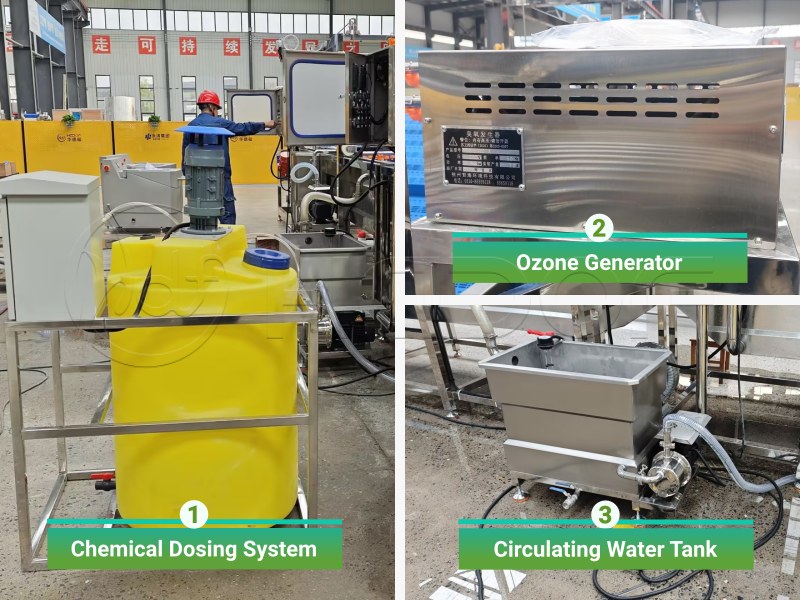
To support three-stage washing, we recommend one chemical dosing system, three ozone generators, and a water recirculation unit. The dosing system includes a 300 L mixing tank, metering pump, pH/ORP monitor, and connecting pipelines. Its pump delivers treatment solution to designated washers at adjustable rates of 0–150 L/h. Tikmēr, pH/ORP monitoring helps operators assess solution conditions and manage sanitation. The three ozone generators support independent, timed operation in their respective washing stages. Tomēr, operators must control ozone concentration, application methods, and operating conditions according to safety requirements. Turklāt, the recirculation system transfers suitable reusable water to earlier washing stages. Proper replenishment, filtration, overflow control, and wastewater discharge help reduce unnecessary water consumption. Tomēr, the final rinsing stage requires appropriate water quality. Tāpēc, the system must prevent untreated wastewater from entering the final clean-water rinsing tank.
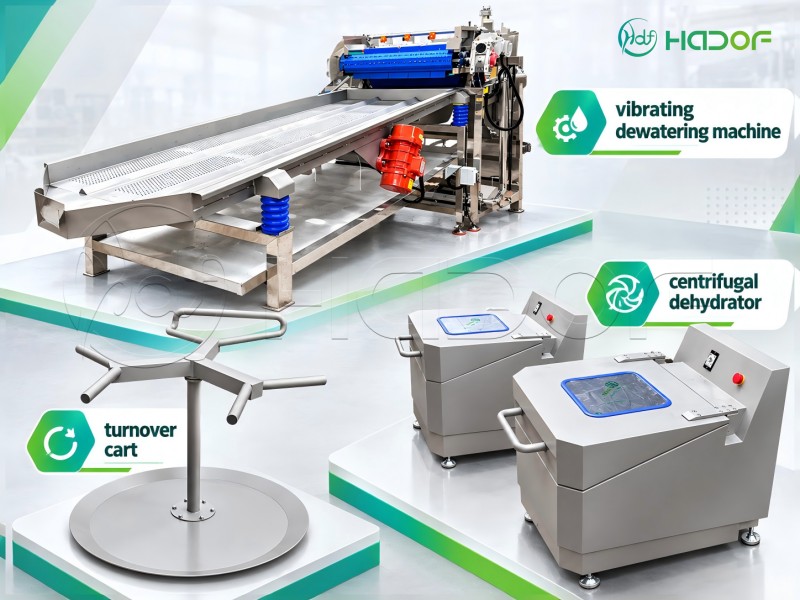
At the end of the washing line, we recommend a vibrācijas atūdeņošanas mašīna, a turnover cart, un 2 centrifugal vegetable dehydrators. Tāpēc, to reduce moisture after three-stage washing, we recommend adding a vibrating drainer to connect the future sorting and packaging operations. Arī, it features a SUS304 structure, dimensions of 3,200× 1170 × 965 mm, un 0.5 kW jauda. Its vibration mechanism removes part of the free surface water while conveying vegetables toward the discharge outlet. Tālāk, the turnover cart uses three baskets for vegetable collection and transfer. For vegetable products requiring further moisture removal, we recommend adding one or two basket-type centrifugal dehydrators for 15 kg vienā partijā processing operation. Līdz ar to, customers can use these machines for selected vegetables requiring more intensive dewatering. If customers require continuous, higher-intensity dewatering for their entire production output, our engineers will reassess downstream equipment quantities and processing capacities. Attiecīgi, we will adjust the equipment configuration and overall project budget.
If you want to learn more about 1,500 kg/h leafy green processing line, you can contact us now!
For a medium-scale industrial leafy green project, the total equipment length, the operating aisles, the water recycling position, and the rear processing area also affect the real plant space. Attiecīgi, our engineers suggest a one-way material flow from the raw-material inlet to the clean-product outlet. In this way, the line reduces the cross movement of washed and unwashed vegetables in the operating area.
☘The main equipment and maintenance area takes about 120–160 m². If you also need raw-material storage, basket cleaning, manuāla šķirošana, un iepakojums, we suggest a total area of about 250–300 m².
☘Turklāt, we suggest that the client reserve enough cleaning and maintenance aisles on both sides of the leafy green washing line. The client should also place the dosing, water recycling, and auxiliary equipment in easy-to-service positions. If the client’s plant space is limited, we can also adjust the auxiliary device positions according to the production flow.
☘For an existing food processing workshop, we can adjust the equipment positions according to the client’s CAD floor plan. Tikmēr, we can check the vegetable processing plant’s existing water supply, drenāža, electrical, and ventilation conditions.
☘Notably, this 1.5 t/h leafy green washing plan uses a 380 V, 50 Hz, three-phase power source for the power supply. We can use about 25 kW as the initial power capacity reference. Tomēr, the final power distribution design must follow the nameplate parameters of all motors, water pumps, and control devices.
Lasīt vairāk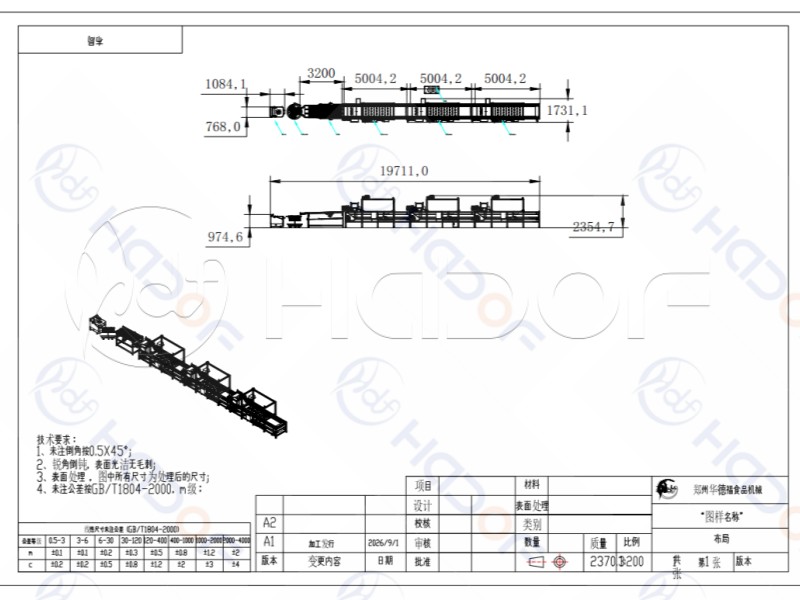
The price of an industrial leafy vegetable washing line depends on machine size, washing stages, materiāls, sanitation, and dewatering configuration. Indeed, the quotation of a three-stage leafy vegetable washing project of 1.5 t/h stays around 50,000-55,000 USD. This plan includes the main washing equipment, a water treatment system, a vibrating dewatering machine, and batch centrifugal dehydrators. Turklāt, it suits vegetable processing companies that already own a plant and downstream sorting, griešana, or packaging facilities. Turklāt, we can add an automatic sorting conveyor, a leafy vegetable cutting machine, and packaging equipment. We can add these machines according to the buyer’s needs. Turklāt, if the client later expands the line to weighing, iepakojums, and cold-chain delivery, we can reserve connection positions.
Lasīt vairāk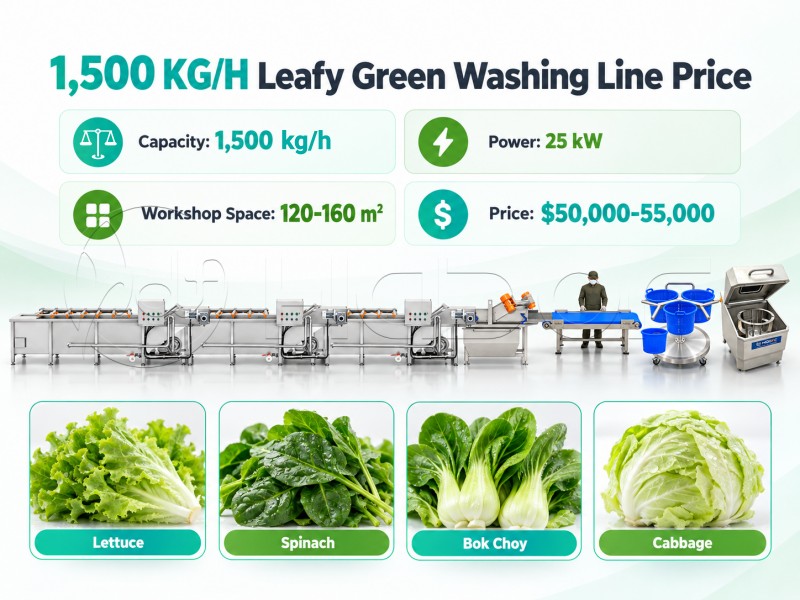
For leafy vegetable processing projects with a capacity of 1,500 kg/h, we recommend adopting a combination of three-stage bubble cleaning and dehydration, rather than relying on a single large-scale vegetable cleaning machine. This configuration separates preliminary impurity removal, chemical cleaning, and final rinsing, enabling operators to control the water quality, cleaning duration, and material conveying rate. Turklāt, the clean vegetables enter directly into a vibrating drainage unit, with the option of further centrifugal dehydration according to the requirements of the final product.
A client cannot judge the final output of a vegetable washing line only by one bubble washing machine’s rated capacity. Tāpēc, we define 1,500 kg/h as the design level of this washing line. Tad, our team confirms the continuous capacity according to the actual process configuration. For different vegetables, the real output also depends on the leaf size, soil content, washing time, and rear dewatering method. To help clients evaluate the capacity, we usually consider the four factors below.
☑Raw material condition: Spinach, salāti, kāposti, and water spinach have different bulk densities and mechanical strengths. Līdz ar to, their real output at the same conveying speed may differ.
☑Washing time: Soil-covered raw material may need a longer washing time. The client cannot raise output only by increasing the conveying speed.
☑Material connection: The feed and discharge heights, the conveying speed, and the buffering method must match. In this way, the line avoids vegetable accumulation.
☑Dewatering requirement: If every product needs centrifugal dehydration, the rear equipment capacity affects the continuous line output.
We suggest that the client define the rated feeding capacity and the real output after all required steps. The client should also test the equipment with real raw material during the acceptance.
This set of equipment suits lettuce, spināti, kāposti, mustard greens, water spinach, and some leafy herbs. Tomēr, different vegetables need suitable bubble strength, conveying speed, and dewatering method. Our team can help clients set the operating parameters for different products. Turklāt, we can arrange reasonable batch changeovers and cleaning procedures. For soil-covered root vegetables, we usually recommend a dedicated brush washing machine or a peeling machine.
Yes. The client can add vegetable cutting, šķirošana, weighing, and packaging equipment according to the final product requirements. The client can place these machines at the front or rear of the washing line. Piemēram, a client who produces fresh-cut lettuce can cut the leaves at a suitable position. Tad, this client can arrange the fine washing and dehydration. Tikmēr, a client who mainly sells whole washed leafy vegetables can finish washing and draining first. Tad, the produce moves to sorting and packaging. The specific equipment order depends on the raw material condition, the cutting size, and the hygiene requirements.
If you plan to build a 1,500 kg/h industrial leafy vegetable washing line, Hadof can customize the whole processing plan. Turklāt, we follow your vegetable type, workshop size, working shifts, un investīciju budžets. Tad, our team can configure a three-stage bubble washing machine, a water treatment system, and a vibrating dewatering machine. We can also add centrifugal dehydration equipment as you need. Turklāt, we can add vegetable cutting machines, vortex vegetable washers, and vegetable sorting conveyors. We can also add weighing machines and packaging equipment. Turklāt, we provide root vegetable washing and peeling lines and vegetable blanching equipment. We also provide IQF frozen fruit and vegetable lines and fruit and vegetable drying machines. Tāpēc, these lines help you expand your food processing business step by step. You can send your raw material type, mērķa jauda, workshop floor plan, and equipment budget to Hadof. Our engineers will then design a leafy green washing line that fits your project. They will also provide the equipment specifications, process suggestions, layout drawings, and a custom quotation.
Atstājiet savu ziņojumu
 Bezmaksas citāts
 Latviešu valoda
 English
 Afrikaans
 Shqip
 العربية
 Հայերեն
 Azərbaycan dili
 Беларуская
 Bosanski jezik
 Български
 မြန်မာစာ
 Hrvatski
 Čeština
 Dansk
 Nederlands
 Eesti keel
 Wikang Filipino
 Suomi
 Français
 Galego
 Deutsch
 Ελληνικά
 हिन्दी; हिंदी
 Magyar
 Íslenska
 Bahasa Indonesia
 Gaeilge
 Italiano
 日本語
 Қазақ тілі
 한국어
 ພາສາລາວ
 Latīna Latviešu valoda
 Bahasa Melayu
 Монгол
 नेपाली
 Norsk
 Português
 Português do Brasil
 Română
 Русский
 Cрпски језик
 Slovenčina
 Slovenščina
 Español
 Svenska
 ภาษาไทย
 Türkçe
 Українська
 Oʻzbek tili
 Tiếng Việt
Jūs nevarat kopēt šīs lapas saturu